-
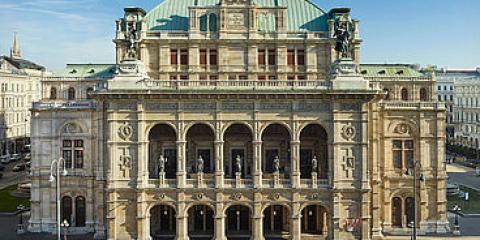 © Poehn
The Marriage of Figaro
Opera by Wolfgang Amadeus Mozart State Opera Vienna - Wientickets available
The Marriage of Figaro State Opera Vienna - Wien Thu 17.Sep 2026 19:00 replace me !The Marriage of Figaro State Opera Vienna - Wien Sat 05.Jun 2027 replace me !The Marriage of Figaro State Opera Vienna - Wien Tue 08.Jun 2027 replace me !The Marriage of Figaro State Opera Vienna - Wien Sat 12.Jun 2027 replace me !The Marriage of Figaro State Opera Vienna - Wien Mon 14.Jun 2027 replace me !Figaro and Susanna want to marry, but their wedding day turns into chaos: Count Almaviva stalks Susanna, while Basilio schemes on his behalf.
Marcellina challenges Figaro with an old marriage vow, supported by Bartolo, who wants revenge. The love-struck page Cherubino causes additional confusion. With wit, cunning and the help of the deceived countess, Figaro and Susanna finally succeed in exposing the count. In the end, love and reason prevail - and the "great day" has a happy ending.
In Barrie Kosky's fast-paced production, Susanna and Figaro have to fight their way through the magnificent rooms of Almaviva's palace from the narrow space the Count has allocated them before the outside space finally opens up as a perspective in the fourth act. Barrie Kosky: "We know from Shakespeare that a garden or a forest - especially in the evening - is a democratic space. Anything is possible there."
In Lorenzo Da Ponte, Wolfgang Amadeus Mozart had finally found the long-sought poet who "understood the theater". The delight in Da Ponte's wonderful theatrical poetry is reflected in every note of Mozart's music, with magnificently composed ensembles such as the sextet in the third act virtually challenging the singers' enthusiasm. But the arias that Mozart writes for the character of Countess Almaviva, for example, are not only incomparable pieces of music, but also cleverly conceived moments of musical dramaturgy in which the action does not simply stand still, but rather seems to breathe calmly.
It was probably a risk that Wolfgang Amadeus Mozart and Lorenzo Da Ponte took right from their first collaboration, but in any case a completely unusual approach in later 18th century Vienna: To begin a new opera without having been commissioned for it beforehand, without any certain prospect of a performance or even remuneration. On top of this, the model chosen by the composer, Beaumarchais' comedy Le Mariage de Figaro, also called into question the realization of the planned opera on a public stage - after all, Joseph II had forbidden the performance of the play, which was charged with revolutionary dynamite, as late as 1785 on the grounds that "the piece contains much that is offensive". Lorenzo Da Ponte dispensed with Figaro's nobility-critical monologue from Beaumarchais' original, but the basic tone remained - and so there is possibly some truth in the account in the librettist's often very free memoirs that it was ultimately due to his, Da Ponte's, diplomatic skills that the Emperor finally ordered the premiere of Le nozze di Figaro on May 1, 1786 in the Hofburgtheater in person.
Get tickets for an evening with Mozart's masterpiece at the Vienna State Opera and book tickets at viennaticket.at.
(Source: wiener-staatsoper.at)